
Today, in the construction of all kinds of buildings, they try to use materials that are light in weight and at the same time resistant. Of course, in construction projects, the factors of time (time to prepare and use all kinds of materials) and cost are also important. One of these materials that can meet these expectations is concrete foam Light concrete is Foam concrete is used in roof slope and building floors. The strength and durability of foam concrete depends on the materials that are used to prepare it, for example, if sand and gravel are used in its preparation, the composition has a higher density than when the combination of foam and concrete is used alone.
What is foam concrete?
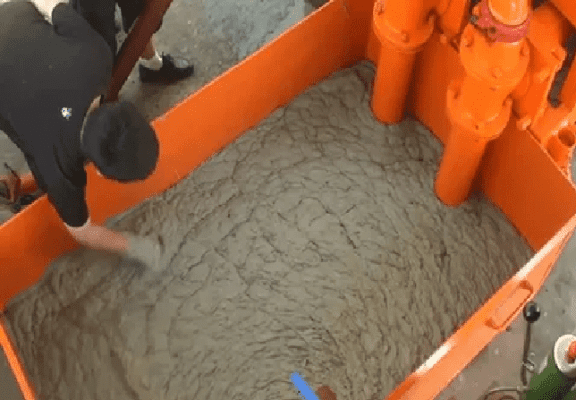
Foam concrete, also known as lightweight cellular concrete (CLC), is a lightweight and versatile building material. It is created by mixing a cementitious binder (usually portland cement or fly ash), water, and a stable foam that is produced by introducing air into a mixture of water and a foaming agent. Foam acts as a mechanical agent and air entrainer and creates small air bubbles in the concrete matrix.
The foam used in foam concrete is usually produced by mixing a foaming agent with water using a foam generator. This foam consists of small and stable bubbles with a high proportion of air. When this foam is added to the cement mixture, it spreads evenly throughout the mixture and forms a cellular structure.
Types of foam concrete
There are different types of foam concrete, each of which has specific features and uses. Here are some common types:
فوم بتن با چگالی کم: این نوع فوم بتن دارای چگالی کم است که معمولاً از 300 کیلوگرم بر مترمربع (18.7 پوند بر فوت³) تا 800 کیلوگرم بر متر مکعب (49.9 پوند بر فوت³) متغیر است. عمدتاً برای مقاصد عایق کاری مانند پر کردن حفره ها، عایق کاری سقف ها یا به عنوان پرکننده سبک وزن در ساخت و ساز استفاده می شود.
فوم بتن با چگالی متوسط: فوم بتن با چگالی متوسط دارای چگالی بین 800 کیلوگرم بر مترمربع (49.9 پوند بر فوت³) تا 1200 کیلوگرم بر متر مکعب (74.9 پوند بر فوت³) است. اغلب برای کاربردهای سبک وزن مانند ساخت بلوک ها، پانل ها و عناصر پیش ساخته استفاده می شود.
فوم بتن با چگالی بالا: این نوع فوم بتن چگالی بالاتری دارد که معمولاً از 1200 کیلوگرم بر متر مکعب (74.9 پوند بر فوت³) تا 1600 کیلوگرم بر متر مکعب (99.9 پوند بر فوت³) متغیر است. برای کاربردهایی که به استحکام سازه ای بالاتر نیاز است، مانند دیوارهای باربر یا سیستم های کف، مناسب است.
Foamed Concrete with Additives: Additives can be incorporated into foamed concrete to enhance specific properties. For example, fibers can be added to increase the tensile strength and crack resistance of the material. Chemical additives can also be used to modify properties such as setting time, workability or water resistance.
Foam concrete with lightweight aggregates: Foam concrete can be produced by combining lightweight aggregates such as expanded clay, perlite or vermiculite. This combination increases the light weight and insulating properties of the material.
Self-leveling foam concrete: Self-leveling foam concrete is designed to be smooth and level without the need for extensive manual leveling. It is usually used for leveling floors and filling uneven surfaces.
These are just a few examples of foam concrete types and variations can exist based on specific project requirements and regional practices. Choosing the type of concrete foam depends on factors such as desired density, resistance, insulating properties and desired applications.
Concrete foam resistance
The resistance of foam concrete refers to its ability to withstand various forces and external conditions. Here are the key aspects of strength in foam concrete:
Compressive Strength: Compressive strength measures the maximum load or pressure that foam concrete can withstand before it breaks or collapses. The compressive strength of foam concrete can vary depending on factors such as floor density, cement content, curing conditions and additives used. Typically, foam concrete can have a compressive strength of several hundred kilopascals (kPa) to several megapascals (MPa). The compressive strength of foam concrete is generally lower than that of conventional concrete, but it can be adjusted to meet specific project needs.
Flexural strength: Flexural strength refers to the ability of foam concrete to resist bending or deflection. Foam concrete may exhibit lower flexural strength than traditional concrete due to its lightweight nature. However, the addition of fibers or reinforcing materials can increase its flexural strength, allowing it to withstand applied loads and resist cracking.
Durability: The durability of foam concrete is related to its ability to withstand environmental conditions such as freeze-thaw cycles, chemical exposure, and moisture penetration. Proper mixing design, use of appropriate additives and good processing methods can increase the durability of foam concrete. In addition, the use of waterproof additives or surface coatings can improve its resistance to water penetration.
Fire resistance: Foam concrete can have good fire resistance due to its high air content, which acts as an insulating barrier. It can withstand high temperatures and provide fire protection in various applications. However, foam concrete's fire resistance can vary depending on its composition, density, and thickness.
Impact resistance: The impact resistance of foam concrete refers to its ability to absorb and dissipate energy due to impact or dynamic loads. The lightweight nature of foam concrete can make it more susceptible to impact damage than dense concrete. Incorporating impact-resistant additives or using appropriate thickness and reinforcement can improve its impact resistance.
It is important to note that the strength of foam concrete can be customized based on the needs of a specific project. By adjusting the mixing scheme, density, admixtures and reinforcement, the properties of foam concrete can be adjusted to meet the desired strength characteristics for different applications.
Implementation of foam concrete
The implementation of foam concrete includes various stages, from preparation to implementation. Here is an overview of the process:
Material preparation:
A. Gather the necessary materials: this includes cement, aggregates (if needed), water, foaming agent, foaming agent, and any desired additives.
B. Setting up the foam generator: Connect the foam generator to the compressed air source and the water source. Adjust the foam generator settings to create the desired foam density and consistency.
c. Prepare the cement mixture: In a cement mixer, mix aggregates (if using) and water. Mix thoroughly to create a homogeneous base mixture.
Foam production:
A. Start the foam generator: Turn on the foam generator and adjust the air and water flow rates to produce stable foam.
B. Mix the foam and the base mix: Add the foam produced from the foam generator to the mixer containing the cement mix. Mix gently to ensure the foam is evenly distributed throughout the mixture.
Mixing and casting:
A. Mix the foam concrete: Continue to mix the foam and the base mix until a homogeneous foam concrete mixture is obtained. Mixing time may vary depending on specific needs and equipment used.
B. Prepare the execution site: clean and prepare the surface where the concrete foam is executed. Install any necessary templates or forms.
c. Pouring or pumping foam concrete: Transfer the foam concrete mixture to the site using a foam concrete pump or by hand pouring. Ensure smooth and even application of foam concrete.
Cooking and finishing:
A. Allow to cure: After application, allow the foam concrete to harden and gain strength. The curing time may vary depending on factors such as environmental conditions and the desired strength of the concrete foam.
B. Finishing and shaping: If needed, use cutting machines or tools to shape and trim concrete foam to the desired dimensions and lines.
Quality control and testing:
A. Perform Quality Control Checks: Perform visual inspections and tests to ensure foam concrete meets desired specifications and requirements.
B. Testing strength and other properties: Use appropriate testing equipment to evaluate compressive strength, density, thermal properties, and other relevant properties of foam concrete.
It is important to note that the specific implementation process may vary based on factors such as project requirements, equipment availability, and regional practices. It is recommended that when implementing foam concrete, you follow the manufacturer's instructions, industry standards, and consult with experts for specific guidance.
How is the execution of flooring with foam concrete?

In the production of foam concrete, cement, water, foaming agent and soft sand (airy sand) are used. The mixing and production of concrete foam is done in such a way that the concrete foam production tank is filled with water and cement and sand are added to it, and while the water, cement and sand are being mixed, the foaming agent is added under pressure. The ingredients are mixed together until the appropriate concentration level is reached. In this way, concrete foam is produced and poured in the desired location by means of high pressure hoses.
Devices for implementing foam concrete
For the implementation of foam concrete, several devices and equipment are usually required. Here are some common devices used in the production and application of foam concrete:
- Foam generator: Foam generator is a device that produces stable foam by mixing the foaming agent with water. It produces a stable foam with desired properties such as bubble size and stability.
- Foam concrete mixer: Foam concrete mixer is used to mix foam with cement mixture. It ensures the proper combination of foam, water, cement and other additives to produce a homogeneous foam concrete mixture.
- Cement mixer or concrete mixer: A cement mixer or concrete mixer is used to prepare cement mixture. It combines cement, aggregates (if needed), water, and other additives to create the base mix to which the foam is added.
- Concrete foam pump: The concrete foam pump is used to transfer the concrete foam mixture from the mixer to the desired location. This allows efficient and controlled placement of foam concrete, especially in larger or elevated construction projects.
- Concrete foam molds: Concrete foam molds are used to shape the concrete foam into the desired structure. They can be in the form of panels, blocks or custom molds for specific applications.
- Concrete foam cutting machine: Concrete foam cutting machine is used to cut and shape concrete foam blocks or panels. This helps in achieving accurate dimensions and shapes for building elements.
- Compressor: A compressor is required to provide the necessary air pressure to produce foam in the foam generator. This ensures compressed air flow.
- Testing Equipment: Various testing equipment such as slump cones, densitometers, and strength testing devices may be required to monitor and evaluate the properties of foam concrete during production and after application.
- Safety Equipment: Personal protective equipment (PPE), including gloves, goggles, masks, and safety clothing, must be used to ensure the safety of workers during the handling and application of foam concrete.
These are some of the key tools and equipment commonly used to implement foam concrete. Specific requirements may vary depending on the scale of the project, production method and desired properties of the foam concrete produced.
Advantages of foam concrete over pumice
1. High resistance to pressure and heat
Foam concrete can withstand heat up to 1270 degrees Celsius. This can be a tremendous advantage for a building. Suppose there is a fire in a building, the time it takes for it to burn completely can be the right time to evacuate the building.
2. Fast shipping and deployment
Mixing and preparation of concrete foam with a special device and floor construction using concrete foam is done by high pressure hoses that can pump up to 50 meters, which can make concrete foam more practical.
3. Sound, cold and heat insulation
Due to its high porosity and low density, lightweight concrete can act as an insulator against sound, heat and cold. Foam concrete with acoustic absorption can be used in multi-story buildings be very useful. The air-filled bubbles in foam concrete provide excellent thermal insulation properties, making it suitable for insulation purposes in buildings. Foam concrete has good fire resistance due to the high ratio of air and the absence of coarse aggregates that can act as a thermal bridge.
4. Drying time
Time is a very important factor in construction. Therefore, one of the ways to speed up the project process is to use materials with minimal drying time, foam concrete is one of these building materials that can be used for this purpose.
5. Light weight
فوم بتن به طور قابل توجهی سبک تر از بتن سنتی است و حمل و نقل آن را آسان تر می کند. چگالی آن می تواند از 300 کیلوگرم بر متر مکعب (18.7 پوند بر فوت³) تا حدود 1600 کیلوگرم بر متر مکعب (99.9 پوند بر فوت³) باشد.
Foam concrete problems
In addition to all the advantages that we have mentioned, it is necessary to point out some disadvantages of foam concrete flooring:
1. Contraction and loss of concrete foams over time
It has been said that concrete foams may shrink over time and decrease in height by 15-20%. In addition, the useful life of concrete foams is up to 2 years.
2. Low adhesion
Foam concrete does not stick easily, if it is used in building walls, it is necessary to use a lot of mortar for it to stick well.
3. Creating cracks in foam concrete parts
Over time, it is possible that foam concrete cracks, and if it is not maintained correctly, these cracks will become bigger and eventually fall into pieces.
Application of foam concrete
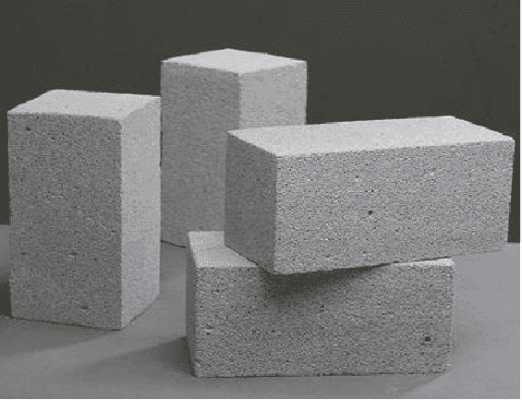
Foam concrete has wide applications in various industries and construction projects. Here are some common uses of foam concrete:
Insulation: Foam concrete's lightweight and insulating properties make it suitable for insulation purposes. It can be used to insulate ceilings, walls, floors and attics, providing thermal insulation and energy efficiency.
Void Filling: Foam concrete is often used to fill cavities and voids, especially in areas where access is limited. It can be used to fill abandoned underground tunnels, sewer lines, underground tanks and other inaccessible spaces.
Lightweight blocks and panels: Foam concrete can be cast into blocks, panels or other prefabricated elements. These lightweight elements are used in construction for load-bearing and non-load-bearing walls, partitions and cladding.
Road and bridge construction: Foam concrete can be used in road and bridge construction as a light-saving material. It reduces the overall weight of the structure, minimizes settlement and provides thermal insulation.
Sound insulation: The cellular structure of concrete foam helps absorb and reduce sound transmission. It is used in walls, floors and ceilings to provide sound insulation in buildings, recording studios, theaters and other sound sensitive areas.
Geotechnical applications: Foam concrete is used in geotechnical engineering for applications such as slope stabilization, lightweight filling, and void filling in soft soils. It helps to improve soil stability, reduce settlement and control erosion.
Floor leveling and underlayment: The self-leveling properties of foam concrete make it suitable for leveling uneven floors and creating a smooth surface for finishing the floor. It is usually used in residential, commercial and industrial buildings.
Pipe and trench filling: Foam concrete can be used to fill trenches and pipe installations. Its lightweight nature reduces the load on underground infrastructure while providing insulation and stability.
Fire protection: Foam concrete has good fire resistance due to its high air content. It is used as a fire resistant material in walls, barriers and fire protection applications.
Green Roofs and Landscaping: Foam concrete is used as a lightweight growing medium for green roofs and landscaping projects. This provides a supportive and well-drained substrate for plant growth.
Repair and reconstruction: Foam concrete can be used to repair and restore damaged concrete structures. It can fill voids, stabilize foundations and restore structural integrity.
Artistic and decorative applications: The versatility of foam concrete allows it to be used in artistic and decorative applications. It can be molded, sculpted and textured to create unique architectural elements, sculptures and art installations.
These are just a few examples of the various uses of foam concrete. Its lightweight nature, insulating properties and efficiency make it a preferred choice for various construction and engineering projects.
Foam concrete or mineral pumice?
First, we will give a brief explanation of mineral pumice. Mineral pumice are porous and lightweight rocks that are obtained from the eruption of volcanoes. Light weight, high porosity, high resistance, low density, and sound insulation are among the prominent features of these volcanic stones. These features have caused that in Stylization of structures be used
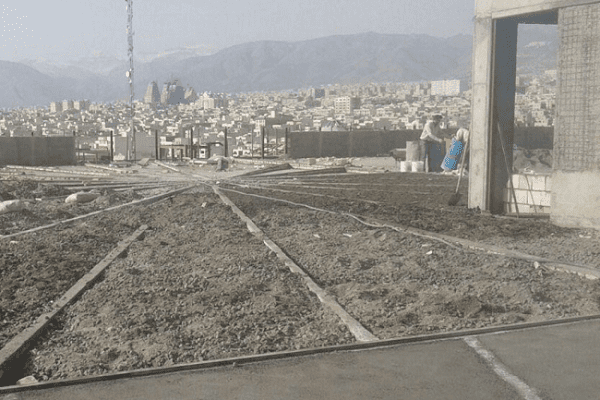
One of the applications of mineral pumice is in the slope and flooring of buildings. In flooring with pumice The best construction pumice because; fine pumice, almonds, hazelnuts, etc. are used. Flooring with pumice can be done in two ways. A method that spreads dense pumice evenly and pours a mortar of sand and cement on it, and flooring is done in this way. Another method is to pour a mixture of pumice seeds (fine and coarse) along with water and cement on the surface.
Comparison of foam concrete and mineral pumice
The advantage and superiority of pumice over concrete foam
- It is said that foam concrete and mineral pumice are both lightweight, but mineral pumice is lighter than lightweight concrete.
- In mixing and preparing foam concrete, the amount of water used is more than the amount of water required for floor construction using pumice.
- The volume of materials that are mixed together in the preparation of foam concrete is very important, and if a mistake occurs and the expected concentration is not obtained, it may cause problems. Sometimes it happened that they had to collect the floor.
- Another advantage of pumice over concrete foam is the long life of mineral pumice, while the life of light concrete is very short.
- Mineral pumice has antibacterial and disinfectant properties, but lightweight concrete does not have this ability.
- Lightweight concretes decrease in height after drying, but pumice does not.
- Mineral pumice is completely resistant to combustion and heat, while concrete foam reacts quickly to heat and fire due to the foaming agent used in its preparation and also emits toxic gases.
The advantage and superiority of concrete foam over pumice
As we explained in the previous sections how to implement foam concrete flooring,
1. Light concrete is spread on the desired surface through high pressure hoses, while this is not the case with mineral pumice. So it is easier to work with foam concrete.
- According to the method of working with concrete foam that we explained, the time to work with it is less.
- The amount of materials used in flooring with light concrete is more and can cause a difference in the final costs of flooring.
Related articles
lightweight block with pumice
5 benefits of using mineral pumice in textile
7 advantages of using mineral pumice in the treatment plant
You can order any amount of mineral pumice in its different types through the numbers below Mantashlou Mineral Industrial Co Register and receive your order at the best price as soon as possible. Mantashlou's best-selling pumice include; Construction pumice stone and Industrial pumice stone is